


Brass CNC Machining: An In Depth Overview
 Nov 01, 2024|
 View:353
Brass, an alloy composed primarily of copper and zinc, has been a popular material in various industries for centuries. With the advent of Computer Numerical Control (CNC) machining, the precision and complexity of brass components have reached new heights. CNC machining offers a highly accurate and efficient method for shaping brass into a wide variety of parts, from intricate musical instrument components to high - precision mechanical parts.
Properties of Brass for CNC Machining
Brass has several properties that make it an ideal candidate for CNC machining. Firstly, it has excellent machinability. The relatively soft nature of brass compared to some other metals allows for easier cutting, resulting in less wear on cutting tools. This means that CNC machines can operate at higher speeds and feeds, reducing production time while maintaining high precision.
Secondly, brass has good corrosion resistance. This property is particularly important in applications where the part will be exposed to environmental factors or certain chemicals. For example, in plumbing fixtures or electrical components, the corrosion - resistant nature of brass ensures a longer lifespan of the product.
Brass also has a beautiful aesthetic appearance. It can be polished to a high shine, making it a popular choice for decorative items. In CNC machining, this aesthetic quality can be enhanced by precise milling and turning operations to create smooth surfaces and intricate designs.
CNC Machining Processes for Brass
Milling
CNC milling of brass involves the use of rotary cutters to remove material from a brass workpiece. The machine can be programmed to create complex shapes, such as slots, pockets, and contours. High - speed milling is often used for brass, as it can quickly remove material while maintaining a good surface finish. For example, in the production of brass gears, CNC milling can accurately shape the teeth of the gears to ensure proper meshing and smooth operation.
Turning
In CNC turning of brass, a workpiece is rotated while a cutting tool is fed into it to remove material. This process is ideal for creating cylindrical parts, such as brass rods, shafts, and bushings. The precision of CNC turning allows for tight tolerances to be achieved. For instance, in the manufacturing of precision brass spindles for watches, CNC turning can ensure that the diameter and length of the spindle are within extremely narrow tolerances.
Drilling
Drilling is another important CNC machining process for brass. It is used to create holes in the brass workpiece. CNC - controlled drills can ensure that the holes are straight and have the correct diameter. In the production of brass musical instruments, for example, precise drilling is required to create holes for keys and valves.
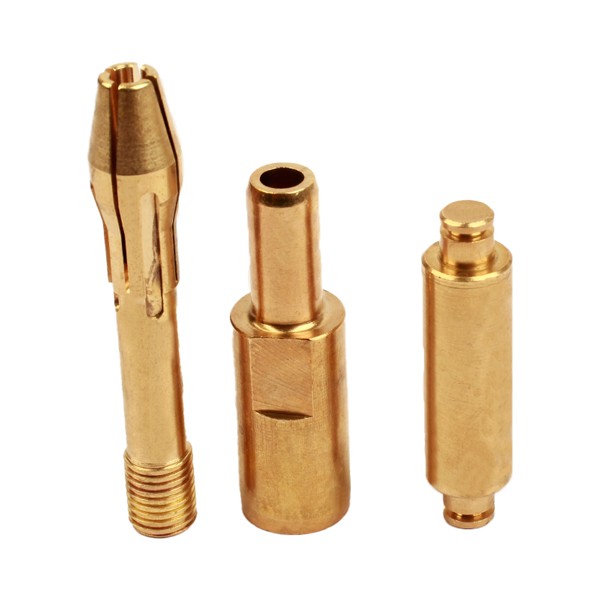
Applications of Brass CNC - Machined Parts
Musical Instruments
Brass is a staple material in the production of musical instruments such as trumpets, trombones, and French horns. CNC machining allows for the creation of highly precise components, such as valves, slides, and bell sections. The accurate shaping of these parts is crucial for achieving the proper sound quality and playability of the instrument.
Electrical Components
Brass is widely used in electrical components due to its good conductivity and corrosion resistance. CNC - machined brass parts can be found in connectors, terminals, and switches. The precision of CNC machining ensures that these parts fit together properly, reducing the risk of electrical problems such as short circuits.
Plumbing Fixtures
Brass is a common material for plumbing fixtures such as faucets, valves, and fittings. CNC machining enables the production of complex shapes and precise threading, ensuring a tight seal and proper water flow. The corrosion - resistant nature of brass also makes it suitable for long - term use in plumbing systems.
Challenges in Brass CNC Machining
Chip Control
Brass can produce long, stringy chips during machining, which can interfere with the machining process. Proper chip - breaking techniques, such as adjusting cutting parameters or using special cutting tools, need to be employed to ensure smooth operation.
Tool Wear
Although brass is relatively soft, it can still cause some wear on cutting tools over time. Regular tool replacement or resharpening may be required to maintain machining accuracy.
Surface Finish
Achieving a high - quality surface finish can be a challenge in brass CNC machining, especially when machining complex shapes. Careful selection of cutting tools, cutting parameters, and finishing operations such as polishing are necessary to obtain a smooth and aesthetically pleasing surface.
Brass CNC machining offers a wide range of opportunities for creating high - quality, precise parts in various industries. Its unique properties, combined with the capabilities of CNC technology, make it a valuable material for applications ranging from musical instruments to electrical and plumbing components. However, it also presents some challenges that machinists need to overcome through proper techniques and tool selection. As technology continues to advance, the future of brass CNC machining holds the potential for even greater precision, efficiency, and innovation.


